


The Wisdom of the Heart
What Does Buddhism Say About Worry? A Gentle Guide
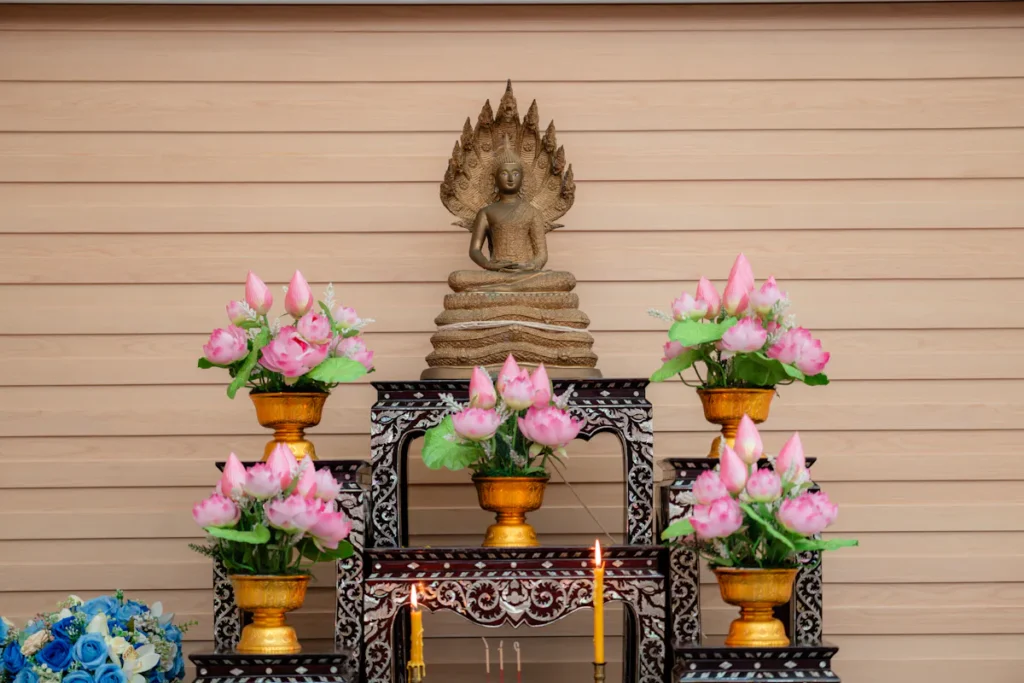
What does Buddhism say about worry? It calls it borrowed suffering — pain we generate for a future that hasn’t arrived yet, and may never arrive the way we imagine it. The Buddha didn’t ask us to stop worrying by force. He offered something more precise: a way to see what worry actually is, and from that seeing, a way to set it down.
We’ve all lain awake at 2 AM running the same circuit. A difficult conversation tomorrow becomes a possible disaster next month becomes a worst-case scenario next year, all in the space of twenty minutes, in the dark, in a bed that should feel safe. The body is still. The mind is already somewhere else, somewhere that doesn’t exist yet.
In Buddhism, this relentless mental spinning has a specific name. And naming it, really understanding what it is, is the first step to carrying it differently.
Key Takeaways – Buddhism calls worry uddhacca-kukkucca, restlessness and worry, the fourth of the five hindrances to mental clarity – The Buddha compared a worried mind to windswept water: too agitated to reflect anything clearly – Buddhism distinguishes productive concern (which points toward action) from unproductive rumination (which leads nowhere) – The antidote isn’t suppression, it’s witnessing: meeting the worried mind with gentle awareness rather than trying to fight it into silence
What Buddhism Says About Worry: The Pali Name for It

The Pali term is uddhacca-kukkucca, a compound that translates as restlessness (uddhacca) and worry or remorse (kukkucca). In Buddhist teaching, it is the fourth of the five hindrances: mental states that cloud clarity and block the kind of awareness that allows us to see ourselves honestly.
What’s striking about this compound is its reach. Uddhacca is the mind that won’t settle, the buzzing, reaching, projecting quality. Kukkucca covers both future-facing worry (what might go wrong) and backward-facing remorse (what already did). The fourth hindrance doesn’t separate the two because, in practice, they often spiral together: we worry about what’s coming because we’re still carrying unresolved weight from what’s passed.
The Buddha’s own image for this state is worth sitting with. He compared uddhacca-kukkucca to a pot of water that has been whipped by the wind. The water is moving too fast to show you your own reflection. You’re looking into it, trying to see clearly, trying to understand what you should do, what you should feel, what’s going to happen, and all you see is agitation.
This is what worry does to the mind. Not because the questions aren’t real. But because a windswept mind cannot hold still long enough to receive its own answers.
According to Tricycle’s teaching on the five hindrances, the hindrances are described as “conditioned”, not permanent features of who we are, but states that require fuel to persist. They arise, they can be seen, and when the fuel is removed, they naturally subside.
Why We Worry: The Root Buddhism Points To
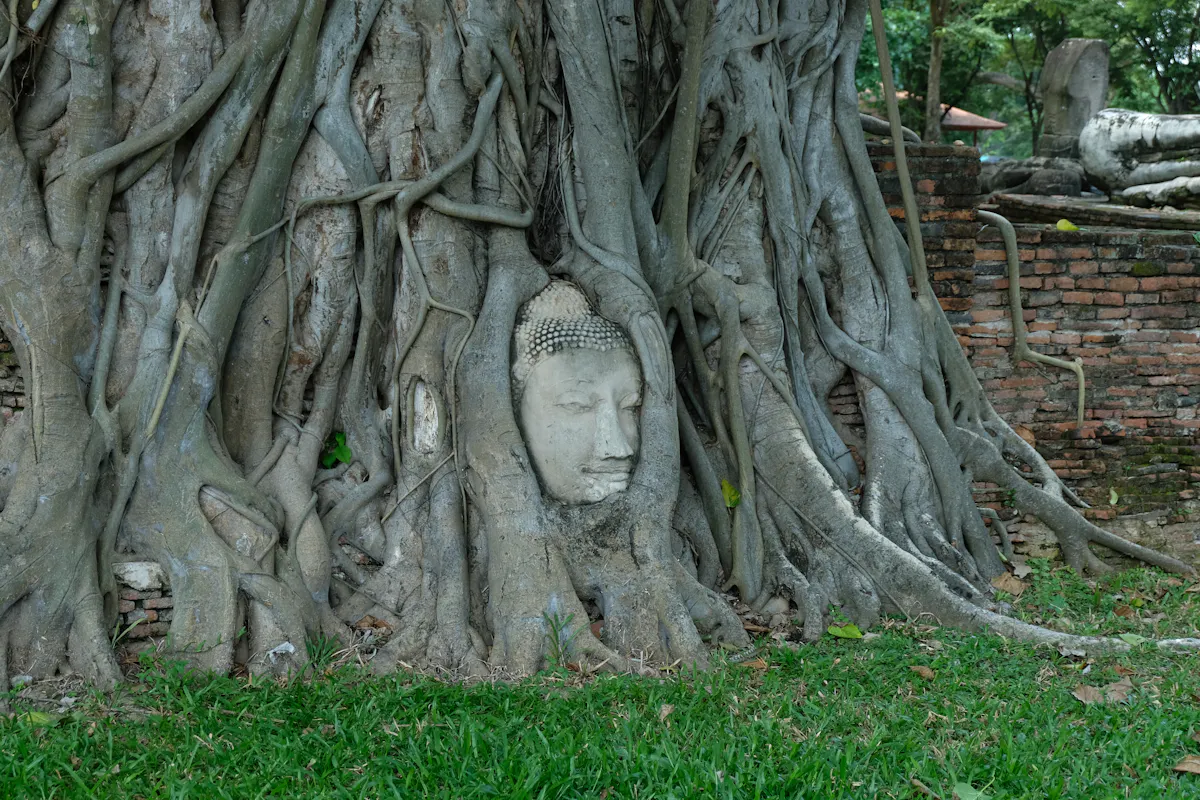
Buddhism doesn’t frame worry as a character flaw or a sign of weakness. It frames worry as the predictable result of a mind that craves certainty in a world that offers none.
We worry because we want the future to cooperate. We want to know how it ends. We want the outcome of the job interview, the test result, the difficult conversation, before it arrives, so we can feel safe. And since the future never arrives early, we simulate it. We run the scenarios. We pre-live the disaster.
The problem is that the future only exists in the mind right now — it has no address, no texture, no warmth. Worry is always a present-moment experience about an imagined future. The ache is real. The event is not yet.
This connects to the Buddhist concept of Dukkha, the friction that arises when we want things to be permanent and stable in a world that is constantly changing. Worry is one of Dukkha’s most active expressions: the craving for a guaranteed future in a life that guarantees nothing.
This is not an abstract problem. According to the American Psychiatric Association’s 2025 Mental Health Poll, 43% of Americans report feeling more anxious than the previous year, with financial anxiety affecting 70% of those surveyed. An estimated 42.5 million U.S. adults are currently living with an anxiety disorder — the most common mental health condition in the country. The worried mind is not a personal failing. It is the ambient condition of modern life. Buddhism saw this coming 2,500 years ago and named it.
Useful Worry vs. Useless Worry: The Buddhist Distinction

Most “stop worrying” advice fails because it treats all worry as equally pointless. The Buddhist approach to worry is more precise — and more useful — than that.
The Indian master Shantideva, writing in the Bodhicaryavatara more than a thousand years ago, offered a teaching that feels startlingly modern:
“If there is a remedy, why be upset? If there is no remedy, what is the use of being upset?”
This is not a dismissal of real problems. It’s a framework for discernment.
Worry that contains a signal, a genuine concern pointing toward a possible action, is not the same as worry that loops. If you can do something about what’s troubling you, Buddhism says: do it. Take the step. Make the call. Write the email. The concern has served its purpose; let it go. But if there is nothing you can do; if the outcome is genuinely beyond your reach right now, then the worry is borrowing suffering from a future that belongs to no one yet.
Most of us have tried to “stop worrying” by willpower alone and found it doesn’t work. That’s because the instruction is wrong. Buddhism isn’t asking us to stop. It’s asking us to ask a better question:
Is there something I can do about this right now?
If yes, act, even in a small way.
If no, then the worry is a guest that has overstayed. You don’t have to throw it out. You just have to stop feeding it your attention.
There’s a version of this most of us know from a Sunday evening. The weekend should feel free. But somewhere around 6 PM, the mind has already left, pre-living Monday, pre-worrying the week, pre-exhausting itself on a future that hasn’t even had a chance to be good yet. Buddhism’s framework for understanding suffering calls this the second layer of Dukkha: the suffering of not being able to let reality be what it actually is, right now.
Three Buddhist Practices for Working With Worry

These aren’t techniques to eliminate worry. They’re ways to change your relationship to it, so it no longer runs the whole room.
1. Name it, don’t fight it

When you notice worry arising, name it silently: worrying, worrying. That’s all. No judgment, no instruction, no attempt to talk yourself out of it.
This practice comes from sati, mindfulness of the mind (Right Mindfulness on the Eightfold Path), and it does something specific: it creates a small but significant gap between you and the thought. You are not the worry. You are the one who can see the worry. That distance, however thin, is where freedom begins.
2. Return to the body

Worry lives in the mind. The body is always in the present moment.
Place one hand on your chest. Feel its warmth, the subtle rise and fall of breath. The weight of your own palm. You don’t have to fix anything from here. You just have to notice that the body, right now, in this moment, is okay.
This is the practice of returning to the present moment that mindfulness teachers have pointed to for centuries. The breath is the most immediate anchor we carry. It costs nothing. It’s always available. And it cannot be located in the future.
3. Apply the Shantideva test

When a worry returns, and it will, ask it directly: Is there something I can do about this right now?
If yes: take one small, concrete step. Even a tiny action, writing down one thing, sending one message, making one decision, tells the nervous system that the concern has been received and acted on. The loop can rest.
If no: acknowledge it honestly. I can’t resolve this now. This is not mine to carry tonight. Then return to the breath, to the warmth of the body, to the only moment that is actually available to you.
Some people find that a small physical anchor — a mala bracelet as a meditation anchor, a stone they reach for in difficult moments — helps invite the pause. Not as a solution, but as a tactile return: one texture, one breath, one moment of coming back.
Frequently Asked Questions
Isn’t some worry useful? How do I know when to worry and when to let go? Yes, Buddhism distinguishes concern that points toward action from rumination that loops without resolution. The test is simple: can you do something about it right now? If yes, act. If no, the worry has become borrowed suffering. The signal has arrived; what remains is noise.
What does Buddhism say about anxiety vs. worry, are they the same? Buddhism doesn’t use our clinical distinction, but its teaching on uddhacca-kukkucca covers both. Worry tends to be more thought-based and future-directed; anxiety often has a stronger somatic (bodily) component. Buddhist practice addresses both through present-moment awareness and compassionate observation, though for clinical anxiety disorders, professional support alongside practice is worth considering.
I’ve tried mindfulness and I still can’t stop overthinking. What am I missing? Mindfulness isn’t meant to stop thinking, it’s meant to change your relationship to thoughts. The goal isn’t a quiet mind; it’s a mind that can notice its own noise without being swept away by it. If you’re fighting the thoughts, you may be adding more fuel. Try naming without judging: thinking, thinking. That’s the whole practice, in those two words.
Does Buddhism say worry is a character flaw? No. Uddhacca-kukkucca is described as a conditioned state, something that arises due to causes and conditions, not a permanent feature of who you are. The Buddha didn’t ask us to be ashamed of the worried mind. He offered a way to see it clearly, which is the first step to setting it down.
A Mind Like Still Water

The windswept water doesn’t settle by being told to settle. It settles when the wind stops.
Buddhism and worry have a long conversation — one that doesn’t end in “don’t.” It ends in see. See what it is. See where it comes from. See that you are not it.
In Buddhism, the wind is not the world. It’s the mind’s relationship to the world, the reaching, the resisting, the pre-living of disasters that may never come. When we practice, not perfectly, not permanently, but honestly, the wind eases. The water stills. And in the stillness, something becomes visible that was always there: the capacity to hold what’s difficult without being destroyed by it.
Worry will return. That’s part of being human, part of caring about things and people who matter. But there is a difference between the kind of worry that carries us away and the kind we can sit with, observing it with warmth, asking what it needs, and then setting it gently down.
We are all navigating this together. And the mind that can see its own agitation, without running from it, without drowning in it, is already quieter than it was a moment ago.
Sources

- American Psychiatric Association, 2025 Annual Mental Health Poll
- Tricycle: The Buddhist Review, Five Hindrances — Restlessness and Worry
- Access to Insight, Shantideva — Bodhicaryavatara